Budget guide · July 2026
Hat bar vs. embroidery bar: which does your budget want?
Planners ask for these two formats by name more than any others. They solve different problems, and the price tags behave differently too.
Define the contenders
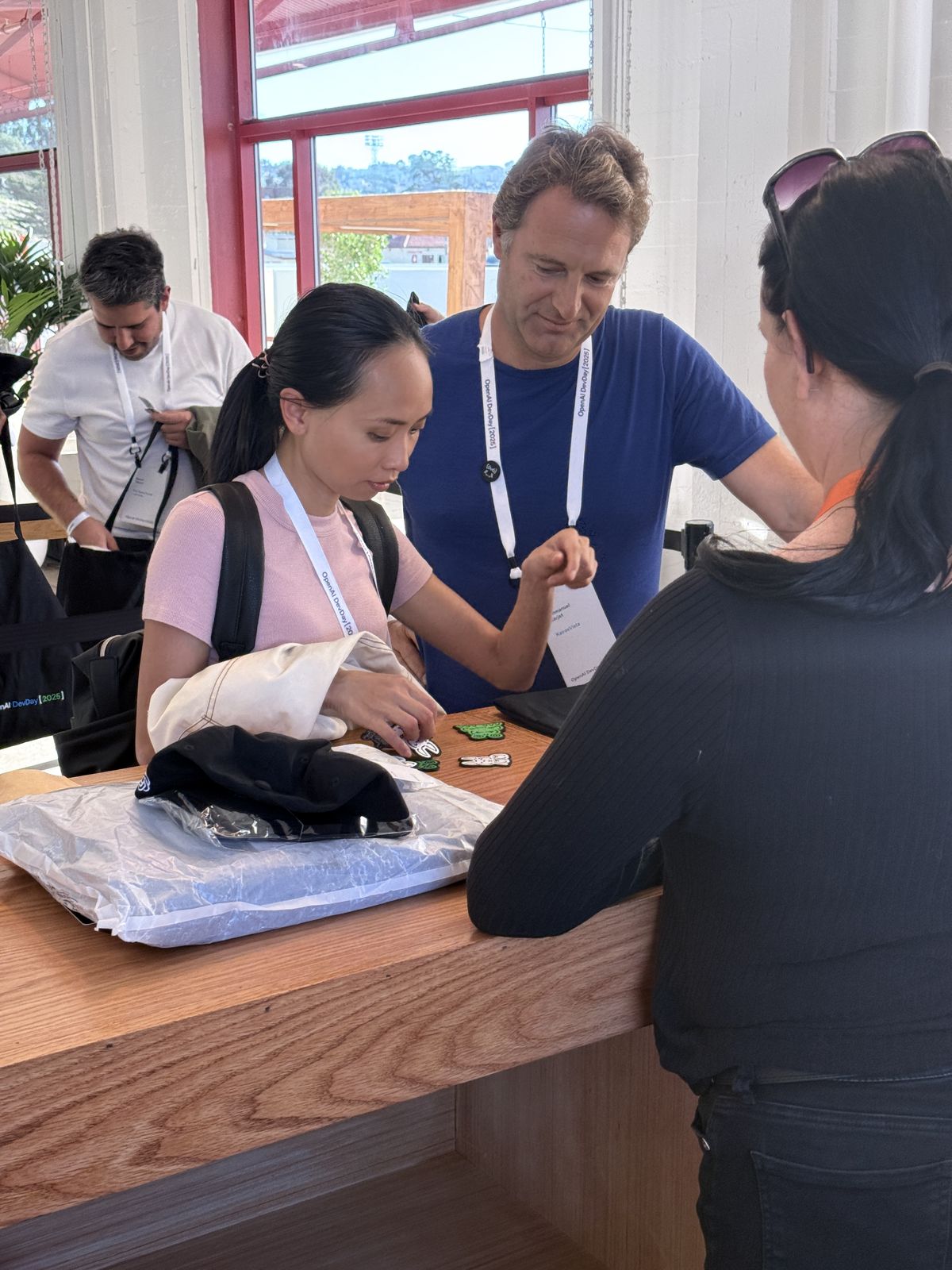
A hat bar is a curated rail of blank caps — Richardson 112, Flexfit, dad hats — where guests pick a cap and a pre-made embroidered patch, and the crew heat-applies it on the spot. An embroidery bar stitches directly onto the item live: initials, names, or a small logo, needle and thread in real time. Both photograph well. Only one of them scales.
Throughput: hat bar by a mile
Patch application takes under a minute; direct stitching takes three to twenty depending on density. Per crew hour, a hat bar serves triple to tenfold what a stitch head can. For crowds above about 120 in a standard window, the hat bar is not merely cheaper per piece — it is the only format that avoids an unacceptable line. The throughput table has the exact planning numbers.
Unit economics: closer than you think
The hat bar carries higher inventory cost — structured caps are premium blanks, and you stock a patch menu besides. The embroidery bar spends less on blanks (totes and pouches are cheap; thread is nearly free) but more on time, and time is the $250/hr line. Net: at small headcounts the embroidery bar usually totals lower; as the crowd grows, crew-hour pressure flips the advantage to the hat bar. The crossover typically sits near the 100–150 guest mark, which is why our 150-guest guide prices both.
Experience value: embroidery bar, narrowly
Watching a machine stitch your initials is a stronger memory than watching a press close — there is a reason the stitch head draws the thickest crowd in our gallery shots. The hat bar counters with agency: guests assemble their own combination, which produces the social-post moment. If your event lives on content, call it a draw and decide on throughput instead.
The hybrid that usually wins
Run the hat bar as the volume engine and put one stitch head beside it doing monograms on the caps guests just built. The patch line moves everyone; the monogram upgrade turns the piece personal; the machine provides the spectacle. On the ledger it reads as one station base, a patch press, and one extra operator — almost always cheaper than two separate stations, and it outperforms either format alone.
The hidden-cost column for each format
Every format keeps one cost off the brochure. The hat bar’s is inventory depth: a convincing patch wall wants 8–12 designs stocked deep enough that hour three does not look picked over, and premium structured caps carry real unit cost — you are buying a small retail stock, and what does not move is only useful if your vendor returns it (we do; ask others). The embroidery bar’s is artwork prep: every logo needs digitizing into a stitch file, a per-design cost with a real lead time, and last call lands earlier because a six-minute piece needs runway. Neither hidden line is a dealbreaker; both belong on the quote in ink.
Lead time is a cost line too
The hat bar wants its patches three to four weeks out — custom-shape chenille and woven patches are produced, not pulled from a shelf. The embroidery bar wants vector art ten days out for digitizing and a stitched sample. Compress either timeline and rush fees appear: expedited patch runs, overnight blank freight, rush digitizing. On a tight calendar the decision can make itself — inside two weeks, an embroidery bar running our proven monogram fonts (no digitizing needed) is frequently the only format with zero rush charges on it. It is the rare case where the slower machine is the faster booking.
How sponsors flip the ledger
At conferences and festivals, both formats convert unusually well into sponsorship inventory: “caps courtesy of” a sponsor patch slot on the wall, or the stitch station branded as a sponsor’s lounge anchor. A sponsor covering even the blank line moves a hat bar from budget item to near-wash, and the sponsor gets the one booth activity attendees queue for voluntarily. If your event sells sponsorships, price the station with that page open and treat the format question as “which one does my sponsor’s logo want to live on” — the answer funds the answer.
One caution from the field: sponsor logos belong on the station and the patch wall, not stitched onto every piece by default. Guests keep what feels like theirs. A cap with their initials and a discreet sponsor patch outlives a billboard cap by years — and the sponsor’s impression rides along on every one of those years. Structure the deal around placement, and both ledgers win.
Both formats, priced against your actual date: request the side-by-side quote or start from the pricing anchors.